

The Valley of Vitality: Vilcabamba, Ecuador

Tucked deep within the Andes, embraced by mountains and mist, lies the lush and peaceful Vilcabamba Valley—a place once called “The Valley of Longevity.” In the 1970s, the world’s attention turned to this remote corner of southern Ecuador when researchers noted an unusually high number of residents living well beyond 100, many still tending their fields, walking mountain paths, and laughing beneath the sun.
While some of the claims were later exaggerated, the vitality of Vilcabamba’s elders is real—and so is its message: you don’t need a mythical spring to feel ageless. Sometimes you just need the right valley.
A Place Where Time Slows Down
In Vilcabamba, clocks seem to tick differently. The days begin with sunrise, not alarm bells. Meals are prepared slowly, with ingredients harvested from backyard gardens or open markets. People walk—everywhere. They sit outside. They speak with neighbors. And they smile, a lot.
The pace of life isn’t fast—but it is full.
The Earth as Provider, the Body as Partner

One of the central reasons for Vilcabamba’s health and longevity lies in its relationship with the land:
Local, seasonal food: Meals revolve around plant-based staples like beans, corn, cassava, squash, and local fruits—papaya, banana, avocado, naranjilla.
Minimal meat, little sugar: Meat is eaten occasionally, and processed sugar is rare.
Clean mountain water: The valley’s fresh, mineral-rich spring water flows through every home.
Daily movement: The hilly terrain means walking is part of life—often while carrying baskets, tools, or children.
No one here “goes to the gym”—life itself is exercise.
The Longevity Lifestyle: What We Can Learn

1. Eat From the Land, Not the Lab
Choose foods with roots in the soil, not factories. Vilcabamba diets are rich in whole grains, legumes, and garden vegetables.
Try this ritual: Begin one day a week eating only whole, unprocessed plant-based meals—think cooked beans, quinoa, garden herbs, and fruit.
2. Water is Life
Vilcabamba’s elders drink spring water daily. No sugary drinks, no artificial fizz.
Try this ritual: Start your day with a large glass of filtered or infused water. Add lime, cucumber, or mint for a refreshing lift.
3. Move Naturally
People here walk, bend, carry, climb. It’s not “exercise”—it’s living.
Try this ritual: Take a 20-minute walk after one meal each day. No earbuds, no rush—just presence.
4. Prioritize Peace
Stress is one of the most overlooked causes of premature aging. In Vilcabamba, life is lived slowly, and community support is strong.
Try this ritual: Unplug for a full evening each week. Light a candle. Eat slowly. Talk to someone you love. Or sit in silence with yourself.
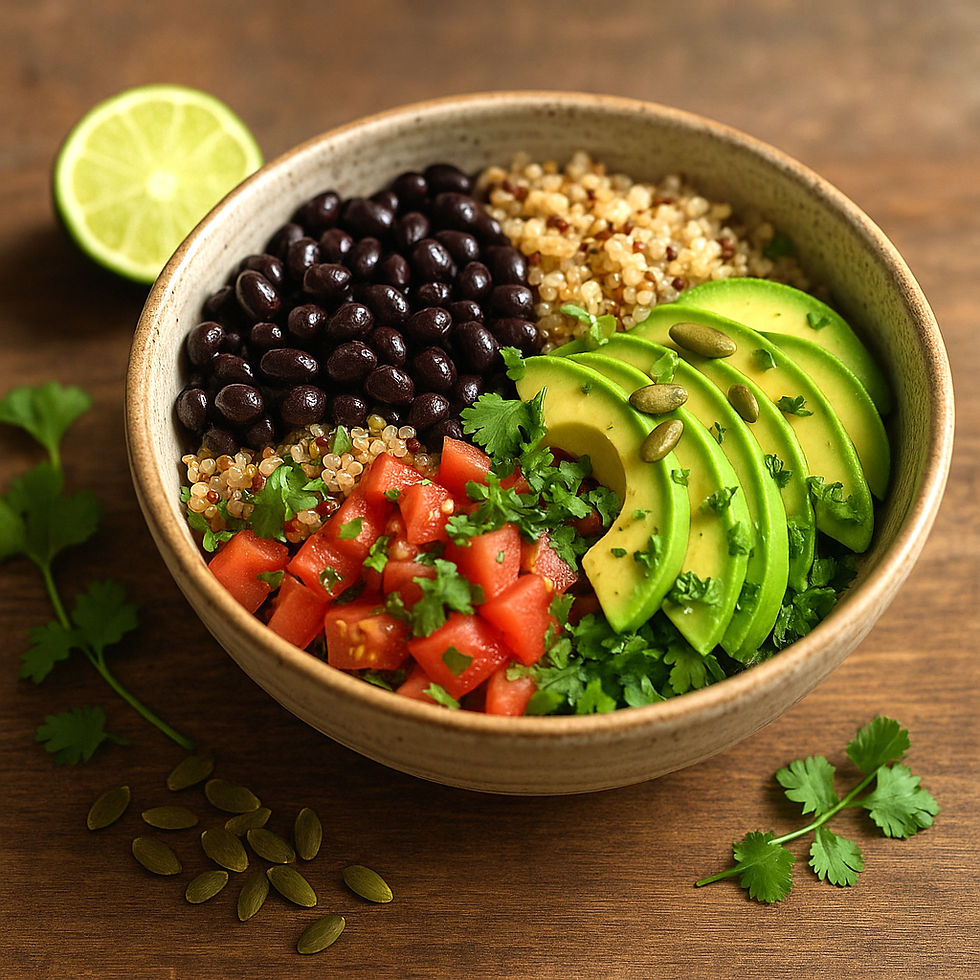
A Taste from the Valley: Vitality Bowl Recipe
Inspired by Vilcabamba’s whole-food traditions:
Andean Vitality Bowl
Ingredients:
1 cup cooked quinoa or amaranth
½ cup cooked black beans or lentils
½ avocado, sliced
Chopped fresh tomato
Sprinkle of pumpkin seeds
Fresh lime juice, olive oil, and chopped cilantro
Optional: Add sliced mango or grilled plantains for a sweet-salty contrast
Instructions:
Layer the beans and grains in the bowl.
Add the avocado, tomato and pumpkin seeds (or dollops of guacamole if using)
Squeeze fresh lime juice over the contents and add a drizzle of olive oil.
Sprinkle chopped cilantro on top.
Serve in a deep bowl. Eat outside if you can.
*Note: To save time you can also use fresh guacamole from the deli section of the grocery store and add dollops of it around the bowl.
The Wisdom of Simplicity
The secret to longevity isn’t always found in what we add—it’s in what we return to. Vilcabamba reminds us that a long life isn’t made in the lab or at the supplement counter. It’s made in the soil, the steps, the slow meals, and the steady hands that pass bowls across generations.
The valley may be far, but its spirit is near. Each time you slow down, eat simply, or laugh deeply, you bring a little of Vilcabamba home.
Coming Next:
The Wild Guardians – Svaneti & Abkhazia, Georgia
High in the Caucasus, where elders still walk the stone paths and sing to the mountains, time has a different meaning.
Historical Sources & Early Claims
National Geographic (1973) – “Three ‘Fountains of Youth’: Vilcabamba, Abkhasia, Hunza”
This article by Alexander Leaf was part of a larger investigation into long-lived communities.
While romanticized, it helped spark global curiosity about Vilcabamba.
Leaf later admitted some claims of extreme longevity were not verifiable.
Reference: Leaf, A. (1973). National Geographic Magazine, January issue.
“Aging in the Andes” by David W. Lutz and Louis R. Berger (1978)
Academic evaluation of age claims and environmental/lifestyle factors.
It questioned the validity of ages while still acknowledging a culture of low chronic disease and sustained activity.
“Longevity Claims in Vilcabamba, Ecuador” (McKeown & Record, 1976)
A scientific critique published in The Lancet, challenging the accuracy of reported ages.
Highlighted poor birth records, which made it easy for age inflation to occur.
Reference: McKeown, T., & Record, R. G. (1976). The Lancet.
Cultural and Lifestyle Observations
Dan Buettner’s mentions of Vilcabamba in Blue Zones discussions (brief references only)
Though not part of the “official” Blue Zones, Buettner has acknowledged that places like Vilcabamba show similar traits: whole food diets, regular movement, and close community.
Local tourism and eco-health writing
Several expat and travel blogs explore Vilcabamba’s appeal as a “healing place,” noting the relaxed lifestyle, traditional diets, and outdoor rhythms.
Example: “Vilcabamba: The Valley of Longevity” (Travel blogs, Retreat centers like Montesuenos and Madre Tierra)
Sources & Further Reading
To deepen your understanding of Vilcabamba and its reputation as a longevity region:
1. Leaf, Alexander.
“Three Fountains of Youth.” National Geographic, January 1973.
A widely circulated article that first popularized Vilcabamba as a region of exceptional longevity, alongside Abkhazia and Hunza.
2. McKeown, Thomas & Record, R.G.
“Longevity Claims in Vilcabamba, Ecuador.” The Lancet, 1976.
A critical study examining the accuracy of age claims in Vilcabamba. It concluded many reports were exaggerated due to unreliable birth records, but acknowledged the region’s healthy lifestyle patterns.
3. Lutz, David W. & Berger, Louis R.
Aging in the Andes. 1978.
An academic monograph evaluating environmental and cultural factors affecting aging across several Andean communities, including Vilcabamba.
4. Montesuenos Retreat Center & Local Health Blogs
Modern wellness writers and local residents continue to document the region’s plant-based eating, daily movement, and healing pace of life.
Examples include travel blogs and retreat journals from Vilcabamba, such as those at Montesuenos.net or [Madre Tierra Resort archives].
Halsell, Grace
"Los Viejos: Secrets of Long Life from the Sacred Valley" 1976
A recounting of the authors time living with the people of Vilcabamba.

Comments