

Ditch the Bottle: The Art of Homemade Salad Dressings

“Let food be thy medicine.” Our ancestors lived by this truth—long before salad dressings came in plastic bottles laced with preservatives and unpronounceable ingredients. Every spoonful of oil, vinegar, and herb was purposeful, nourishing both body and spirit. Today, it’s time we reclaim that wisdom.
Ancestral Foundations: The Original Dressings
Our ancestors didn’t need preservatives, dyes, or artificial emulsifiers to create bold, vibrant dressings. They used:
Cold-pressed oils
Fermented vinegars and citrus
Fresh herbs and spices
Real salt and wild sweeteners (like honey or fruit)
Across cultures, simple dressings have been part of the daily table for centuries:
In ancient Rome, olive oil, vinegar, salt, and herbs were drizzled over bitter greens and root vegetables.
Persian and Ottoman cuisines prized yogurt and herbs like mint and sumac as cooling, digestive dressings.
Traditional East Asian kitchens blended sesame oil, fermented soy (miso, tamari), and rice vinegar.
Medieval European folk used mustard seeds, verjuice (unripe grape juice), and honey to season greens and root crops.
In North Africa, preserved lemons and garlic were ground with olive oil for a tangy finish.
These weren’t just flavor choices—they reflected the wisdom of balance: warming and cooling, bitter and sweet, grounding and bright.
What’s Really in That Bottle?
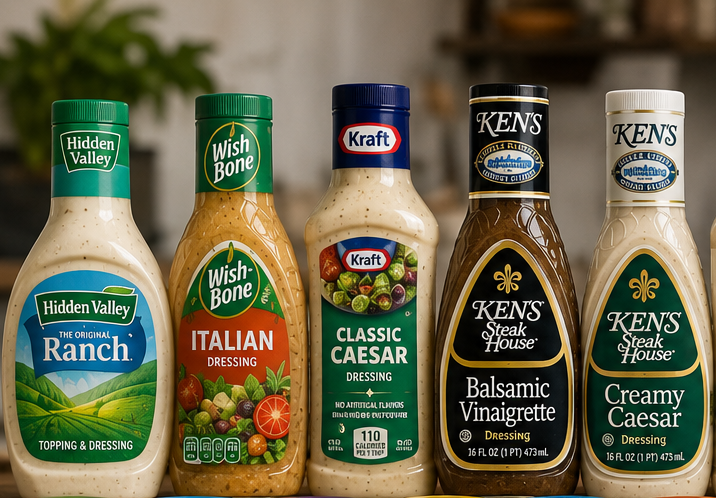
Most commercial salad dressings are more chemical than kitchen. With refined seed oils, gums, artificial flavors, sweeteners, and preservatives, they mask the very vitality of fresh greens and vegetables. Worse, they crowd out the healing potential of ingredients that once adorned our ancestors’ tables.
Common Ingredients in Commercial Salad Dressings & Why You Might Want to Avoid Them
Even dressings labeled “natural” or “lite” often contain hidden ingredients that sabotage your health. Here are some of the most common offenders:
Ingredient | Why It’s Problematic |
Refined Seed Oils (soybean, canola, corn, cottonseed) | High in omega-6 fats, which promote inflammation when out of balance with omega-3s; often heavily processed using hexane solvents and high heat, damaging the oil |
Sugar / High-Fructose Corn Syrup | Added to make dressings more “palatable”—but contributes to blood sugar spikes, cravings, and metabolic issues |
Artificial Sweeteners(sucralose, aspartame) | May disrupt gut bacteria and hormone signaling; not part of any ancestral diet |
Monosodium Glutamate (MSG) | Used to intensify flavor unnaturally; can overstimulate nerve receptors and cause sensitivity in some people |
Preservatives (EDTA, sodium benzoate, potassium sorbate) | Extend shelf life by inhibiting bacterial growth—but also interfere with cellular processes and may burden the liver over time |
Artificial Colors (Yellow 5, Blue 1) | Added to mimic freshness; linked to hyperactivity and behavioral concerns, especially in children |
Thickeners & Gums (xanthan gum, guar gum, carrageenan) | Used to mimic creamy texture, but can cause bloating and digestive upset in sensitive individuals |
Natural Flavors | A vague term that may include chemical solvents and hidden allergens; no transparency required by law |
Emulsifiers (soy lecithin, polysorbates) | Can disrupt gut barrier integrity and contribute to low-grade inflammation |
Why Go Homemade?
Homemade dressings return us to the rhythm of the kitchen—where flavor, function, and tradition come together in a jar. You don’t need a culinary degree—just a whisk, a jar, and a respect for real food.
So where do we go from here? Back to the kitchen. Not the factory line, not the squeeze bottle isle-but the heart of the home. Making your own salad dressing isn't just healthier-it's a return to ritual, a reclaiming of control over your food and wellbeing. And the best part? It's incredibly simple and inexpensive. With just a few real ingredients, you can mix up bold, healing dressings that delight your palate and nourish your body.
For most people, the idea of making dressing from scratch feels fancy or time-consuming—but it’s one of the easiest, most rewarding kitchen skills to master. If you’ve ever whisked oil and vinegar together with a pinch of salt, you’ve already made the foundation of a vinaigrette. It takes just a few minutes, requires no fancy tools, and offers endless ways to explore flavor, heritage, and healing with every batch.
Homemade dressings are also incredibly flexible. You can keep it rustic and traditional with olive oil and lemon, or go bold with tahini, miso, ginger, or preserved lemon. Whether you want something creamy, tangy, sweet, earthy, or spicy, you can tailor your dressing to suit your mood, the season, or your body’s needs.
And it all starts with understanding the core building blocks.
The Anatomy of a Healing Dressing

At its essence, a great salad dressing is a balance of four elements: fat, acid, emulsifier, and flavor. Across cultures and centuries, ancestral cooks used this same foundation—whether they were making a Roman herb sauce, a Persian yogurt drizzle, or a Japanese miso blend.
Let’s bring that timeless knowledge into your kitchen with this simple framework:
1. Healthy Fat (Base)
Choose oils your ancestors could recognize:
Extra virgin olive oil (Mediterranean)
Avocado oil (Mesoamerican)
Walnut, sesame, flax (Old World Europe, Middle East, Asia)
2. Acid (Digestion Aid & Flavor Enhancer)
Apple cider vinegar (gut support, folk remedy)
Lemon or lime juice (cleansing, vitamin C)
Herbal vinegar infusions (like tarragon or thyme)
3. Emulsifier (To Bring It Together)
Mustard (an ancient remedy for colds and circulation)
Tahini or nut butters (rich, grounding, and mineral-dense)
Honey or date syrup (a touch of sweetness for balance)
4. Herbal & Flavor Boosters
Garlic, shallots, or ginger for their warming and antimicrobial properties
Fresh or dried herbs (parsley, dill, basil, thyme)
Spices like black pepper, cumin, or sumac
The Wisdom of Oils: Choosing the Right Fat for Your Dressing

Just as vinegar provides the spark, oil brings the body—it’s the silky, grounding element that carries flavor, nourishes your cells, and reflects the ancestral landscape of your kitchen. Different oils offer distinct textures, tastes, and healing qualities. Here’s a guide:
Oil | Flavor Profile | Ancestral Use & Origins | Best For |
Extra Virgin Olive Oil | Grassy, fruity, slightly bitter; robust | Staple in ancient Mediterranean diets; used in Roman, Greek, and Middle Eastern cuisines for cooking and medicine | Classic vinaigrettes, herb dressings, anything with garlic, lemon, or oregano |
Avocado Oil | Mild, buttery, neutral | Native to Mesoamerica; traditionally eaten raw or pressed into sauces | Creamy dressings, miso blends, citrus vinaigrettes |
Walnut Oil | Rich, nutty, slightly bitter | Used in French and Persian cuisines; historically pressed fresh for finishing dishes | Earthy dressings, beet salads, grain bowls, roasted root vegetables |
Sesame Oil (Toasted) | Deep, smoky, nutty, intense | Ancestral oil in East Asian, Middle Eastern, and Indian cooking; used in small amounts for flavor | Miso ginger dressings, noodle salads, grain bowls |
Flaxseed Oil | Grassy, slightly bitter, delicate | Traditional oil in Northern and Eastern Europe; rich in omega-3s | Delicate vinaigrettes, hormone-balancing blends (add just before serving) |
Pumpkin Seed Oil | Deep green, nutty, toasty-sweet | Common in Austrian and Slavic cuisines; used for fall dishes and medicine | Fall-inspired dressings, roasted squash, bitter greens |
Hemp Seed Oil | Earthy, grassy, mildly nutty | Historically used in ancient China, India, and Europe; high in omega-3s | Anti-inflammatory blends, herbaceous dressings, wellness tonics |
Coconut Oil(melted) | Sweet, tropical, solid when cold | Used throughout tropical Asia and Polynesia; antimicrobial and energizing | Not ideal for cold dressings unless blended—best in warm sauces or thicker emulsions |
Notes for Choosing Oils:
Choose cold-pressed or expeller-pressed oils to preserve nutrients and avoid industrial processing.
Rotate your oils for variety in nutrients and fatty acid balance.
Avoid highly refined or deodorized oils with no flavor or color—they’re often stripped of beneficial compounds.
The Alchemy of Vinegar: Choosing Your Acid with Purpose

In ancestral kitchens, vinegar wasn’t just a preservative—it was a tonic, a digestive aid, and a flavor bridge between fat and herb. Different vinegars bring different energies to your dressing. Here’s a guide to help you choose the right one for your recipe—or your mood:
Vinegar | Flavor Profile | Traditional/Ancestral Use | Best For |
Apple Cider Vinegar | Bright, fruity, slightly sweet with a sharp tang | Folk remedy for digestion, detox, and gut health; common in European country kitchens | Everyday vinaigrettes, honey-mustard, grain salads |
Red Wine Vinegar | Deep, bold, tannic with a bite | Mediterranean and Roman dishes, used with bitter greens and herbs | Hearty greens, roasted vegetables, garlicky dressings |
White Wine or Champagne Vinegar | Light, crisp, floral-acidic with elegance | French kitchens favored this for delicate flavors | Spring greens, citrusy dressings, herbaceous blends |
Balsamic Vinegar (traditional or modern) | Rich, sweet-sour, complex | Originally aged in wood barrels in Italy, used sparingly as a digestive and flavor enhancer | Caprese, fruit-based salads, dressings with honey or figs |
Rice Vinegar | Soft, mellow, sweet-acidic | East Asian kitchens use it for balance and lightness | Miso-ginger, sesame dressings, noodle salads |
Fruit-Infused Vinegars(raspberry, elderberry, pear, etc.) | Fruity, tart-sweet, aromatic | Often homemade or foraged, used for bitters, tonics, and seasonal syrups | Salads with fruit, nuts, or cheese; creamy dressings |
Herbal Vinegars (infused with rosemary, garlic, tarragon, etc.) | Complex, savory, medicinal | Used as both medicine and seasoning in medieval and monastic kitchens | Bitter greens, healing blends, root veggie salads |
Verjuice (unripe grape juice) | Delicate, tart without the harshness of vinegar | Used in medieval European and Middle Eastern cooking | Subtle dressings, nut-based blends, ancient-style dishes |
How to Store, Use & Customize Your Dressings
Once you’ve made your own dressing, you’ll wonder why you ever relied on the bottled kind. But just like any fresh creation, your homemade dressing deserves a little care and understanding.
Storage Tips
Use glass jars (like mason jars or recycled condiment jars) to store your dressing—bonus points if they have a tight-fitting lid for shaking.
Most dressings will keep for 5–7 days in the refrigerator.
Yogurt or avocado-based dressings are best used within 3–4 days.
If olive oil solidifies in the fridge, simply leave the jar on the counter for 10–15 minutes before using, or place it briefly in warm water.
Customization Tips
Taste as you go—this is how ancestral cooks perfected their blends. Add a pinch of salt, a splash of vinegar, or a drop of honey until it’s just right.
Use mustard, tahini, or nut butters to help emulsify your dressing so it stays smooth and blended.
Add a spoonful of miso or tamari for extra umami, or a pinch of crushed red pepper for heat.
If a dressing is too tangy, add a little more oil or a touch of sweetness (like date syrup or maple). If it’s too dull, brighten with more acid or a splash of citrus.
Build-Your-Own Dressing Chart
Create your own ancestral-inspired dressings by mixing and matching ingredients. Use the chart below as a guide to build endless flavor combinations:
Choose an Oil | Add an Acid | Pick an Emulsifier | Flavor & Seasoning Boosts |
Olive oil | Apple cider vinegar | Mustard | Garlic, shallot, black pepper |
Avocado oil | Lemon or lime juice | Tahini | Cilantro, cumin, chili flakes |
Walnut oil | Red wine vinegar | Yogurt or kefir | Dill, parsley, poppy seeds |
Sesame oil (toasted)** | Rice vinegar | Nut butter | Ginger, miso, scallions |
Flaxseed or hemp oil | Balsamic vinegar | Miso | Basil, oregano, maple syrup |
Pumpkin seed oil | Herbal vinegar | Aquafaba (for vegan creamy) | Thyme, preserved lemon, turmeric |
Bonus tip: Let your intuition guide you. Start with small batches, keep notes of your favorites, and don’t be afraid to “season with memory.”
Beyond the Salad: Other Ways to Use Homemade Dressings

Dressings aren’t just for lettuce. In ancestral kitchens, they acted as all-purpose sauces, condiments, and even medicine.
Here’s how you can expand their use:
Grain Bowls: Drizzle over farro, quinoa, wild rice, or millet for instant flavor
Vegetable Roasts: Toss root vegetables in dressing before or after roasting
Dips & Spreads: Stir into hummus, cashew cheese, or yogurt for a layered dip
Wraps & Sandwiches: Use in place of mayo or aioli on flatbreads and pitas
Marinades: Use dressings with mustard, acid, and herbs to marinate tofu, meat, or tempeh
Soup Finishers: Add a spoonful to lentil, squash, or grain-based soups for a splash of acid and fat
🍋 Ancestral cooks didn’t waste a drop—if it had flavor and healing value, it found a home in the next meal.
Family Favorite Recipes
I have included 4 of my families favorite recipes. These can be made vegan or not but switching up the mayonaise. The Italian dressing is very thick which can be thinned with water to use over salads. Just be aware that when you add water it will not store as long and will need to be used quicker. We only dilute it when we are ready to use it. It is also amazing used on cold pasta salad or over hot pasta. I have used the lemon garlic over chicken and rice besides salads. The ranch is fabulous over a quinoa bowl with whatever vegetables you have on hand. I found that using my bullet blender was the easiest way to blend the poppyseed and lemon garlic. The other two are too thick to use the blender. Enjoy.
Closing Thoughts: The Ritual of Flavor
Every homemade dressing is more than a blend of oil and vinegar—it’s a whisper from the past, a simple act of remembrance. Our ancestors seasoned not just for taste, but for balance, nourishment, and healing. Each ingredient served a purpose: to warm or cool the body, to aid digestion, to awaken the senses, or to preserve bounty through the seasons.
Reclaiming the art of homemade dressing is about more than just avoiding additives—it’s about reconnecting to the land, the seasons, and the ancient knowledge woven into every herb and drop of oil.
So let this small act—a jar, a whisk, a splash of vinegar—become part of your kitchen ritual. You don’t need a chef’s title or a recipe book, only your senses and your willingness to remember that real food heals.


Comments