

The Rooted Mind: What Mental Health Really Means

Introduction
Mental Health Is More Than Mental Illness
When many people hear the phrase mental health, they immediately think of severe psychiatric disorders—conditions such as schizophrenia, bipolar disorder, or debilitating depression. And while these conditions absolutely deserve compassionate attention and qualified care, mental health is much broader than crisis or diagnosis alone.
Mental health also lives in the quieter parts of daily life.
It influences how we handle stress, how emotionally resilient we feel, whether we can focus clearly, sleep deeply, cope with change, regulate emotions, or recover after difficult experiences. It shapes whether we move through the day feeling grounded and steady—or chronically overwhelmed, exhausted, anxious, emotionally flat, disconnected, or unable to fully rest.
In other words, mental health is not only about the presence or absence of severe illness. It is deeply connected to the overall state of the nervous system, the brain, the body, and how they interact with the world around us.

This matters because the brain itself is part of the nervous system. Thoughts, emotions, stress responses, sensory input, hormones, inflammation, nourishment, sleep, and life experiences are all intertwined. The mind does not exist separately from the body, and the body does not exist separately from the mind.
Modern life places enormous strain on this system.
Constant stimulation. Chronic stress. Isolation. Sleep disruption. Processed foods. Information overload. Artificial light. Disconnection from nature, rhythm, and stillness. Over time, these pressures can shape not only physical health, but emotional and mental well-being as well.
Many people are not simply “bad at coping.” Often, their nervous systems have been carrying more stress, stimulation, and exhaustion than they were ever designed to handle continuously.
This does not mean all mental illness can be resolved through lifestyle practices alone, nor does it diminish the seriousness of psychiatric conditions that require professional treatment and support. But it does open the door to a broader and more compassionate understanding of mental wellness—one that recognizes the profound connection between the nervous system, the body, and the mind.
Throughout this Rooted Mind series, we’ll continue exploring the many ways daily life shapes mental health—from nourishment and blood sugar stability to sleep, sensory grounding, herbs, rhythm, and the small practices that help the nervous system feel safe enough to rest.
The Brain, the Body, & the Nervous System
Why Mental Health Is Not “All in Your Head”
One of the greatest misunderstandings surrounding mental health is the idea that the mind exists separately from the body—as though thoughts and emotions operate independently from physical physiology.
In reality, the brain itself is part of the nervous system. The nervous system includes the brain, spinal cord, and the vast network of nerves that communicate throughout the body. Together, they regulate not only movement and sensation, but also stress responses, emotions, mood, sleep, focus, digestion, hormones, heart rate, breathing patterns, and our sense of internal safety.
This means mental and emotional experiences are not disconnected from the physical state of the body. They are deeply intertwined.
When the nervous system is supported, many people notice improvements in:
emotional resilience
focus and clarity
stress tolerance
sleep quality
mood stability
ability to rest and recover
And when the nervous system is overwhelmed or chronically stressed, mental health often suffers alongside it.
The Nervous System’s Role in Daily Mental Wellness

The nervous system is constantly scanning both the internal and external environment, asking one central question:
Am I safe enough to relax, heal, connect, and rest?
When the body perceives ongoing stress—whether physical, emotional, environmental, or psychological—it may remain in a heightened state of alertness for long periods of time.
This can affect mental wellness in many ways:
anxiety and racing thoughts
irritability and emotional reactivity
difficulty concentrating
sleep disturbances
emotional exhaustion
feeling “wired but tired”
overwhelm from everyday stressors
Over time, chronic nervous system activation can also contribute to feelings of burnout, emotional numbness, fatigue, and disconnection from life itself.
Many people blame themselves for these experiences, assuming they simply lack discipline, positivity, or emotional strength. But often, the nervous system has simply been carrying more stress than it can sustainably manage without adequate recovery and support.
The Body Influences the Mind
Mental health is shaped not only by thoughts and emotions, but by physical inputs the body receives every single day.
Sleep deprivation affects mood and emotional regulation.Blood sugar instability can increase anxiety and irritability.Chronic inflammation may influence cognition and emotional well-being.Constant stimulation can keep the nervous system from ever fully settling.
Even sensory inputs—light exposure, sound, touch, scent, and connection with nature—affect how the nervous system functions.
This is why supporting mental wellness often requires a broader approach than mindset alone.
The body must also feel supported.
Beyond “Positive Thinking”
Modern culture often treats mental wellness as though it can be solved through willpower alone—think differently, push harder, stay productive, remain positive.
But the nervous system does not respond well to force.
A body that feels chronically unsafe, exhausted, overstimulated, undernourished, isolated, or sleep-deprived cannot simply be “motivated” into calm.
This does not mean mindset is unimportant. Thoughts, beliefs, trauma, relationships, and emotional experiences matter deeply. But lasting mental wellness often requires addressing both the mind and the physical nervous system that supports it.
Sometimes healing begins not with pushing harder, but with creating enough steadiness and support for the body to finally exhale.
Understanding the Stress Response
Fight, Flight, & the Modern Nervous System

The human nervous system was designed to help us survive danger.
When faced with a genuine threat, the body shifts into what is commonly called the fight-or-flight response—a survival state governed largely by the sympathetic nervous system. Stress hormones rise, heart rate increases, breathing quickens, muscles tense, and attention narrows toward immediate survival.
In true emergencies, this response is protective and necessary.
The problem is that the modern nervous system often experiences stress not as an occasional survival event, but as a nearly constant state of stimulation.
Emails, financial pressure, chronic overwork, lack of sleep, information overload, social media, artificial light, overstimulation, unresolved emotional stress, processed food, isolation, and the pressure to always remain productive can all signal the body to stay alert for long periods of time.
The nervous system does not always distinguish well between:
a physical threat
emotional overwhelm
chronic uncertainty
or relentless stimulation
To the body, stress is still stress.
When the Body Never Fully Powers Down
The stress response was never meant to remain activated indefinitely.
Ideally, after a stressful event passes, the parasympathetic nervous system—the “rest and restore” side of the nervous system—helps the body settle back into regulation. Heart rate slows. Digestion improves. Muscles release tension. The body returns to a state where healing, repair, sleep, emotional regulation, and connection become possible again.
But many people rarely reach this state fully.
Instead, they move through life in a low-grade but persistent state of activation:
mentally overstimulated
emotionally exhausted
physically tense
unable to fully relax
tired, but unable to rest deeply
Over time, this can deeply affect mental wellness.
How Chronic Stress Shapes Mental Health
A nervous system under constant stress often struggles to maintain emotional balance and resilience.
This can contribute to:
anxiety and panic
irritability and emotional reactivity
burnout and exhaustion
brain fog and poor concentration
disrupted sleep
emotional numbness
feelings of hopelessness or overwhelm
For some people, stress creates hypervigilance and racing thoughts. For others, it may eventually lead to shutdown, fatigue, or emotional flatness after the system has been overwhelmed for too long.
This is one reason mental health cannot be separated from nervous system health.
The body and mind are constantly communicating with one another.
Regulation Is Not Weakness
In modern culture, many people are praised for pushing through exhaustion, overriding stress signals, and remaining productive no matter how depleted they feel.
But constantly overriding the nervous system often comes at a cost.
Rest is not laziness.Emotional regulation is not weakness.Needing recovery does not mean failure.
The nervous system was designed to move between periods of activation and periods of restoration. Without restoration, resilience becomes increasingly difficult to maintain.
This is why practices that support regulation—sleep, nourishment, sensory grounding, movement, connection, rhythm, time in nature, aromatics, and moments of stillness—matter so deeply for mental wellness.
They help remind the body that it is safe enough to soften, recover, and begin healing again.
Mental Health Is Built in Daily Life
The Small Things That Shape the Nervous System
When people think about mental health, they often imagine it as something separate from ordinary life—something addressed only in moments of crisis or through formal treatment alone.
But much of mental wellness is quietly shaped through the rhythms and conditions of daily living.
The nervous system responds continuously to the signals it receives each day:
how well we sleep
whether we are nourished or depleted
the amount of stress we carry
how often we rest
the level of sensory stimulation surrounding us
whether we feel connected or isolated
whether life feels rhythmic or chaotic
These small inputs accumulate over time.
A single stressful day may not overwhelm the nervous system. But months or years of poor sleep, constant stimulation, emotional strain, undernourishment, lack of stillness, and chronic stress can slowly erode the body’s ability to feel regulated and resilient.
Likewise, small supportive practices repeated consistently can gradually help rebuild steadiness.
The Nervous System Responds to Patterns

The body thrives on rhythm.
Regular sleep.
Predictable meals.
Natural light in the morning.
Moments of quiet.
Movement.Time outdoors.
Human connection.
These may seem simple, but they provide important signals of safety and stability to the nervous system.
Modern life often disrupts many of these natural rhythms:
irregular schedules
artificial light late into the evening
constant notifications and information
eating on the run
multitasking during meals
little time for silence or recovery
Over time, the nervous system may begin to feel as though it never fully gets to settle.
This is one reason many people feel exhausted even when they are technically “resting.” The body may stop working, but the nervous system may still feel alert.
Mental Wellness Is Not Only Emotional
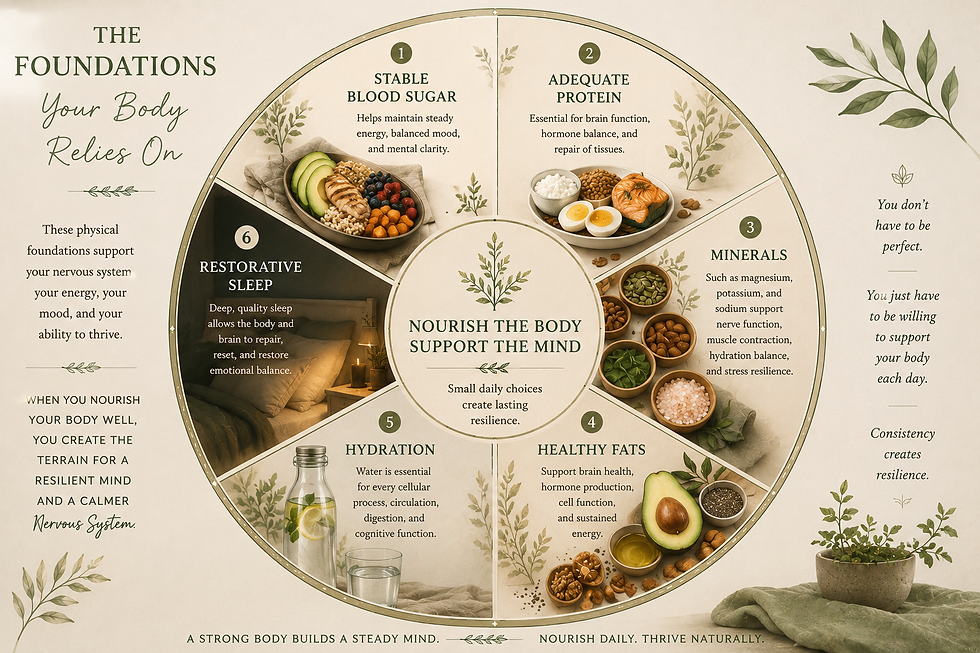
Mental health is also influenced by physical needs that are often overlooked.
The brain requires:
stable blood sugar
adequate protein
minerals such as magnesium, potassium, and sodium
healthy fats
hydration
restorative sleep
When the body is depleted, stressed, inflamed, or constantly overstimulated, emotional resilience often becomes harder to maintain.
This does not mean every mental health struggle is caused by lifestyle alone. Human beings are complex, and trauma, grief, genetics, environment, and serious psychiatric conditions all play important roles.
But it does mean that the body creates the terrain in which the mind functions.
Supporting the nervous system physically can help create a more stable foundation for emotional and mental well-being.
Returning to Steadiness
Many people are searching for dramatic solutions while living in conditions that continually dysregulate the nervous system.
Sometimes what the body needs most is not intensity, but steadiness:
nourishing meals
consistent sleep
moments of sensory calm
slower rhythms
supportive relationships
time away from constant stimulation
daily practices that help the nervous system feel safe enough to rest
These practices may seem ordinary, but they are not insignificant.
Mental wellness is often shaped not only by major interventions, but by the quiet patterns repeated every day.
Signs Your Nervous System May Need Support
Sometimes nervous system dysregulation does not appear dramatic or obvious. Often, it shows up quietly through the patterns and feelings many people have begun to see as “normal.”
You may benefit from more nervous system support if you frequently experience:
feeling tired but unable to fully relax
waking exhausted even after sleeping
feeling emotionally overwhelmed by small stressors
difficulty concentrating or persistent brain fog
anxiety that feels physical or ever-present
shallow breathing or muscle tension
irritability or emotional reactivity
difficulty slowing down or resting without guilt
constantly seeking stimulation, scrolling, or distraction
feeling emotionally numb, disconnected, or “flat”
crashing mentally or emotionally at the end of the day
feeling like your body is always “on”
These experiences do not mean you are weak, failing, or broken.
Often, they are signs that the nervous system has been carrying more stress, stimulation, exhaustion, or emotional weight than it was designed to hold continuously without support and recovery.
The good news is that the nervous system is not static. With consistent care, rhythm, nourishment, rest, and support, it can gradually begin to move toward greater steadiness and resilience again.
Closing Thoughts
Returning to a More Rooted Understanding of Mental Health
Mental health is not only about crisis, diagnosis, or severe illness. It is also shaped in the ordinary moments of daily life—in sleep, nourishment, stress, rhythm, connection, sensory input, rest, and the overall state of the nervous system.
The mind does not exist separately from the body.
How we live, eat, rest, work, connect, and move through the world all influence the nervous system, and the nervous system in turn influences how we think, feel, cope, and experience life itself.
This understanding invites a more compassionate perspective toward ourselves and others. Many people are carrying far more stress, stimulation, exhaustion, and emotional weight than others realize. What may appear on the surface as irritability, lack of motivation, emotional distance, or difficulty coping is sometimes a nervous system that has simply not felt safe enough to fully rest in a very long time.
Throughout this Rooted Mind series, we’ll continue exploring the practical foundations that support mental wellness—from nourishment and blood sugar stability to sleep, sensory grounding, herbs, aromatics, rhythm, and the small daily practices that help the body remember steadiness again.
Because sometimes healing begins not with intensity, but with creating enough safety and support for the nervous system to finally exhale.
An Important Note
This post is intended for educational purposes only and is not meant to diagnose, treat, cure, or prevent any disease or mental health condition.
While nutrition, herbs, aromatherapy, lifestyle practices, and nervous system support can be valuable complementary tools, they are never a replacement for qualified medical or mental health care when it is needed.
Persistent depression, severe anxiety, trauma, panic attacks, self-harm, suicidal thoughts, or feelings of hopelessness deserve compassionate professional support. Reaching out for help is not weakness—it is an act of care and courage.
Always consult an appropriate qualified healthcare professional regarding personal medical or mental health concerns.
Resources
National Institute of Mental Health (NIMH)
Educational resources on mental health conditions, stress, and emotional wellness.
World Health Organization — Mental Health
Overview of global mental health and emotional well-being.
American Psychological Association — Stress Effects on the Body
Information on how chronic stress affects physical and mental health.
Cleveland Clinic — Autonomic Nervous System
Overview of the sympathetic and parasympathetic nervous systems.
Books & Educational Reading
The Body Keeps the Score by Bessel van der Kolk
Explores how trauma and chronic stress affect the brain and nervous system.
Why Zebras Don’t Get Ulcers by Robert Sapolsky
A highly regarded look at stress physiology and chronic stress.
Anchored by Deb Dana
Practical insights into nervous system regulation and emotional safety.
The Polyvagal Theory by Stephen Porges
Foundational work on how the nervous system influences safety, connection, and stress responses.
The Nature Fix by Florence Williams
Explores the relationship between nature, stress reduction, and mental wellness.


Comments